Tuesday, October 6, 2009

Peas!


Fresh peas! This may not seem like much to you, but today I saw peas in the market square. This is the first time I have eaten peas in over 1 1/2 years. I also picked up some wonderful tomatoes. Good tomatoes are fairly common here, as are bananas. I think Uganda eats more bananas per person than anywhere else in the world. Shown here are a type of sweet bananas that make a nice snack. Basically, all the food you buy in the markets is fresh and virtually always organic. Tonight's dinner was cream of tomato soup with a side of fresh peas plus a few of the sweet bananas, quite a nice meal.

Monday, October 5, 2009

Words from my Bishop


The Right Reverend Stanley Ntagali of Masindi, Uganda wrote:

The Diocese of Masindi-Kitara in the Province of the Church of Uganda (Anglican) is very blessed to have, since April 2008, Ms. Janine LeGrand as the first Missionary officially sent by the South American Missionary Society (SAMS).
On arrival Janine started working as the Diocesan Health advisor concentrating on nutrition and hygiene. She has taught many individuals and families to improve their diet and control disease especially malaria which is a major killer disease in Uganda. Children and pregnant mothers are the most affected members of the community.

Janine is a very instrumental and creative person. She has been very helpful in the coordination of mobile clinics throughout the Diocese in partnership with Medical Mission teams from South Carolina. Because of her dedicated and faithful work within the diocese, we recently appointed her to work as the Diocesan Health Coordinator.

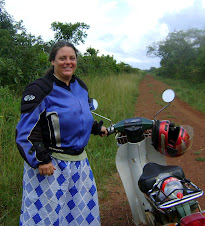
She is a humble and faithful missionary who respects the culture and values of her hosts. She loves the people of Masindi and relates with them well. She is very busy learning the local dialect which is “Runyoro”. She is loved and commonly referred to as Aunt Janine. She joyfully accepted a local pet name of “Abwoli”.

Masindi-Kitara Diocese is benefiting from her dedicated work and I am very thankful to her for her personal contribution to the growth and development of the young Diocese. We shall be celebrating our 5th anniversary in December 2009.

I would also like to thank the South American Missionary Society for sending a mature, hardworking and faithful missionary. We are very pleased with our partnership with SAMS.

Janine is seen as a real gift and blessing to the clergy and Christians of Masindi-Kitara Diocese in particular and Uganda in general. I would like to thank to all those who have supported her work and stay here.

Now Blogging Again


I have now been in Uganda for about a year and a half, and with the initial move into rural Africa, I was unable to continue blogging. Now, I am better set up here for communications and am getting adjusted to life here. So, now I will be picking up the blog again. Hope you enjoy the stories--life here seems to always be an adventure!

Saturday, December 15, 2007

Ebola outbreak and medical supply theft.

Praise God that it appears the recent Ebola outbreak appears to be mostly contained for now, although new cases continue to show up. The 35 known deaths are tragic and more deaths are likely, but the potential toll could have been far, far worse. Included in those 35 dead are a number of health workers who gave their lives trying to help others. Sadly we know that the health center where they worked faced shortages such as a lack of gloves which likely contributed to their deaths. Recent headlines in the Ugandan paper shows that massive thefts of health supplies worth several hundred million shillings from the Ugandan National Medical Stores have been discovered. Stolen items included pain medicine, penicillin, IV fluids, bandages and gloves. If it were not for theft, would some of these people still be alive? We may never know exactly what happened, but human sin is part of life here on earth. One essential aspect in the effort of disease contol can never be stolen--that is health education. That is a gift which cannot be diverted and will serve for a lifetime.

Friday, December 14, 2007

Tip of the Antimicrobial Spear

photo by Samuel Nalwala


BUNDIBUGYO DISTRICT, UGANDA


A healthcare worker in the isolation ward of Mulago Hospital in Bundibugyo District wears full personal protective equipment. While government officials advice against shaking hands or gathering large numbers of people together, the lethal hemoragic fever caused by the Ebola virus infects both patients and their healthworkers. Though Budibugyo District is at the heart of the situation, as of December 8, there have been 101 cases and 22 deaths since August that have been attributed to the Ebola outbreak. With cases reported in Adjumani in West Nile, Mbale in the east, Masaka and Mubende in Buganda region and Kasese, Fort Portal (Kabarole) and Kanungu in western Uganda, fear of the spread of Ebola is affecting the country as a whole.

With the scarcity of healthcare workers, it is perhaps too easy for people in the west to look at the photo above and assume there are adequate resources to treat the epidemic. The reality is that in Uganda, health centers range from level one, which is basically a health care worker under a tree, to a level 5, which is a top referral hospital. The Bundibugyo hospital and the Kikyo Health Center IV combined have handled 33 cases. As of the most recent reports, there are 338 people under medical surveillance to see if they develop infections.

Kikyo Health Center IV's isolation ward is nothing like you've seen in the west. There are 2 watchmen, 2 cleaners, and 6 nurses. That's it. While the western hospital response would be full isolation in an ICU suite and a battery of antiviral drugs, the real need on the battlefield of emergent diseases is for community education, gloves, masks and gowns, booties, and detergents and disinfectants. Five healthworkers have died from Ebola in this outbreak as basics like gloves are not always available. Since there is such a shortage of healtworkers, the loss of these people also means many more people will be less able to receive medical care.

As NGO's scramble to form rapid response teams and stockpile supplies, the shortage of health care workers is critical.

While I did not travel to Bundibugyo District while in Uganda, I did spend time teaching on how to prevent the spread of infectious diseases. Missionary Dr. Scott Kellerman is likely the front line of this fight from recent reports. In Hoima, where SAMS missionary Shirley Morris is working and where we have helped empower community members with basic health knowledge, there is a district task force in place and is carrying out public education via FM radio and has recieved some treatment kits from the minstry of health.

Emergent diseases that are highly lethal, like the Ebola virus, tend to inhibit their own spread somewhat because they hit so hard and so fast. The basic reality is that victims who die in place in isolated communities often don't to spread the disease beyond the community. Unfortunately, fear can have devistating efffects. The health care worker's union is calling for health workers stationed at facilities which have not recieved proper personal protective equipment to flee the affected areas at this point. Infected people can and do leave an outbreak area, likely unaware that they are carrying the disease themselves. One isolation ward has been attacked by members of the local community who fear its presence. Family members told they could not care for infected patients have attacked staff. There have even been reports of ebola-infected patients attacking the medical staff when the staff could not provide transportation to a higher level health center.

Even before the recall, staffing was nothing like what was needed. With combined factors of both an existing shortage of healthcare workers, minimal outside help, and possibly infected healthcare workers and local residents fleeing affected areas, the potential for this situation to get worse is clearly there. The American CDC has been helpful, especially insetting up a testing lab to determine which patients are infected with ebola and which have other diseases instead.

As the disease spreads in areas where Islam is practiced, there is an additional health care concern. The bodies of the deceased are tradtionally washed prior to burial. The ministry of health has contacted the Mufti (Sheik Shaban Mubajje) and asked him to inform his subjects that the Muslims should not wash corpses, and that instead, they should be put in bags immediately and buried by trained heath care workers.

Friday, December 7, 2007


Approaching a local chuch in Buhima. In the church shown above, Janine helped with a health teaching class where she explained how to make a disinfecting solution using bleach (locally know as Jik). As Ebola threatens Uganda, basic health knowledge such as this is critical to preventing disease transmission.

Friday, October 5, 2007

Why not send a doctor?

Why not send a doctor? If the people of Masindi, Uganda need better health care, wouldn't it be the logical thing to send a misssionary doctor? Actually, for places like Masindi, sending a doctor may not be the best choice. The amount of expense and training for a doctor is, of course, much greater and so far I don't know of any doctor interested in moving to live in this place in rural Uganda--but there are other reasons also. Because of there extensive education and developed skills, doctors have to be concerned about constantly keeping their skills current, and keeping up with new procedures and medical developments as well as maintaining his/her certifications can be a challenge in remote areas. Also there can be a huge gap that is hard to cross in teaching those who have had little formal education. This can limit a doctor to focus on curative care instead of the far more cost-effective preventative education. A ministry that is locally reproducable, such as basic health teaching can have a far wider impact than curing one person at a time. A health educator can train a team of local people who can then train teams of more people and on further. A doctor may only be able to use a very small number of his or her skills with the limited infrastructure (e.g. electrical power) and limited available technology and would be hard pressed to train one person to replace him or her much less many to multiply the effect. Preventing disease is usually cheaper and clearly involves less suffering than waiting to cure problems. Proper handwashing, making sure water is safe to drink, preventing malarial mosquito bites and such can make a huge difference in many people's health. Ideally, as a health missionary I would like to work myself out of a job and no longer be needed. However, in a place like Uganda, I expect that to take longer than the three-year term with which I am starting.